

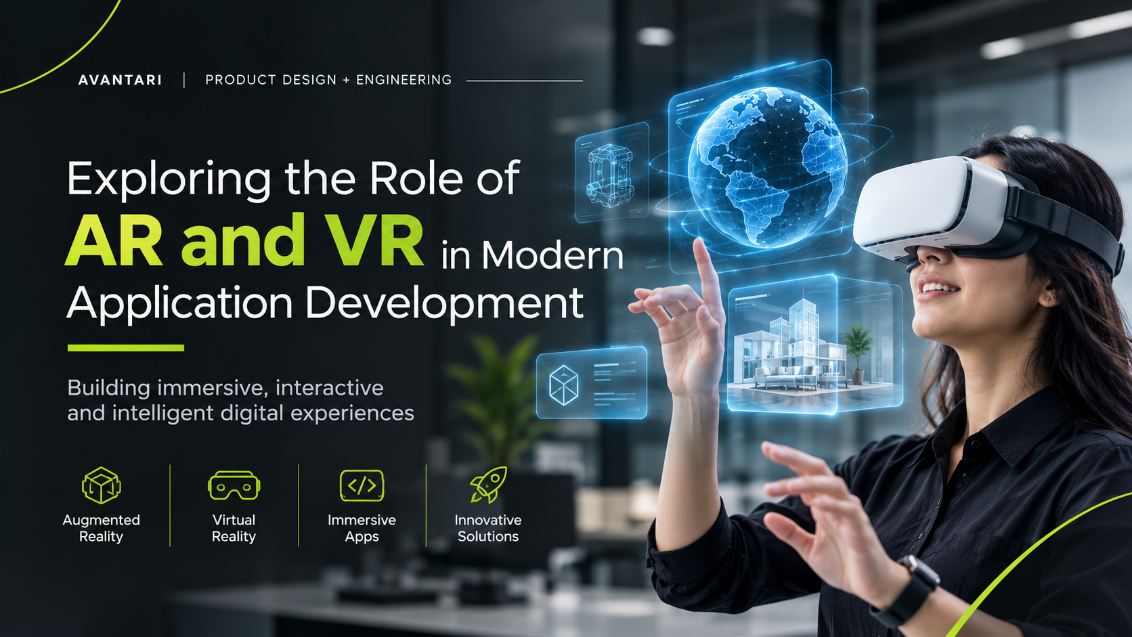
Technology is ever-changing, as is the way people interact with digital products and services. Businesses are looking for new ways to make their applications more engaging, interactive and useful to their customers. Two technologies are driving the change: virtual reality (VR) and augmented reality (AR).
AR and VR are creating new possibilities in app development, such as virtual shopping experiences and interactive learning environments. This allows developers to develop applications that go beyond the traditional screen and give users a more immersive experience of digital content.
AR/VR app development are becoming more important in modern software development as companies seek practical ways to improve product visualisation, client engagement, training and digital experiences.
What is AR/VR Technology?
But before we can discuss how they are used in app development we need to understand how they work.
Augmented Reality (AR) is when you see digital objects layered on top of the real world. It is capable of showing 3D models, animations, text and other digital content on smartphones, tablets and supported wearable devices.
For example AR shopping apps can let customers see a piece of furniture in their own home before they buy it.
Virtual Reality (VR) is a computer generated environment which a person can explore and interact in. The person wears special equipment. For example, a headset with a screen and gloves with sensors. This allows the user to fully experience interaction with the simulated objects and environment.
For example, a VR training app might build an environment for employees to train for a specific work task.
These technologies have different capabilities, and developers choose the right way according to the purpose of the application and users’ needs. Augmented Reality and Virtual Reality
The Future of App Development
AR and VR are changing the way we develop apps both in terms of new ways to present information and in terms of how users interact with it.
- Make Experiences Interactive
Most traditional apps consist of text, images or video and have standard navigation elements. And AR and VR also give users new ways to interact with digital content.”
VR apps let you explore virtual worlds, while AR apps let you place interactive 3D objects in the real world.
Immersive interaction can make applications more engaging when it is the purpose of the product.
- Improved product visualisation
One real world use for augmented reality is to visualise products. Augmented reality apps can help customers visualise the size, design, look and location of a product. Companies can make good use of this technology.
For example:
- Furniture companies can show customers how their furniture would look in their rooms.
- Retail application can offer Virtual product previews.
- Car companies can display interactive car models.
- Manufacturers can send digital copies of products for review
“These apps help customers make better decisions and give more information about the products.”
- Support for education and training
New ways to learn digitally with AR and VR technology. Uses in Education: 3D models, interactive demos and virtual environments can be used to explain complex topics.
Students might, for example, study three-dimensional models of the human body, or take virtual tours of historical places.
VR simulations can also be used in companies to train employees. They learn some procedures in controlled virtual environment before doing it in real world.
- Gaming & Entertainment
AR and VR application development has been largely driven by gaming and entertainment.
Augmented reality games are games that blend the real world with digital elements to provide interactive experiences using supported hardware. VR Games enable players to explore locations, manipulate objects and do virtual activities in simulated environments.
Immersive technologies are used for more than just gaming – they’re also used for virtual events, interactive storytelling and digital experiences.
- Architecture & Estate Assistance
Real estate agents and architects can also use AR and VR apps to demonstrate properties and building designs.
Virtual reality tours can also help potential buyers see the layout of a property from a distance. AR apps can help designers visualise digital models in the physical space.
Important technologies used in AR/ VR app development
Technologies to develop AR/VR apps Selecting the right software, development platforms and hardware is important in developing an AR/VR application.
Some of the common technologies include:
Unity: A widely used platform for creating interactive 2D and 3D experiences, including AR and VR.
Unreal Engine: A real-time 3D engine for building applications with rich environments and visual experiences.
AR Kit: AR Kit is the Apple framework to create augmented reality experiences on supported Apple devices.
AR Core: AR Core is a platform by Google to build augmented reality apps on Android devices.
3D Modelling Tools: 3D objects, models and environments are created and prepared using tools like Blender, Autodesk Maya etc.
The right technology is selected based on project requirements, target devices, performance expectations and application features.
Key step involve in developing AR and VR applications
Stages of AR/VR App Development Creating a truly immersive application requires a good plan and a well-defined development process.
- Define the Application Requirements
Find out what the app is, who it is for, and what it is supposed to do. Decide if your project needs augmented reality, virtual reality or both.
- Select the development platform
Choose the development tools according to the technical requirements of the application and the devices on which it will be installed. When selecting a platform, we need to consider compatibility, performance and future maintenance
- Designing the user interface and experience
The user interface should be easy to use and to interact with. Designers and developers have to think about how the user is going to see, select and manipulate Digital objects.
- Develop and integrate features
Feature Engineering this phase is dedicated to coding the application, generating 3D assets, implementing interactions and integrating other functionalities as needed.
- Test the Application
Testing helps to find problems with the device compatibility, tracking, usability, visual performance and application stability. The comfort of the user also needs to be tested in VR applications.
- Launch and maintain the application
Deploy and run the app after testing the application you can deploy it on any platform you want Regular maintenance can include bug fixes, performance improvements, compatibility and new features.
Challenges of AR/VR App Development
AR and VR provide different development opportunities, but there are a number of technical considerations in developing these applications.
- Device compatibility: hardware and software specifications of devices on which the apps will be used should be taken into account in their development
- Performance Optimization: The detailed 3D models and real time interactions need to be carefully optimised.
- User experience: User experience should be intuitive in the way users navigate, interact and visually organise.
- Development cost: The cost of the projects will depend on the complexity of the application, custom assets, integrations and test requirements.
- Privacy and Security: Apps that use cameras, sensors, location data or personal information must implement the proper privacy and security practices.
Developers are able to take these things into account when they plan and create apps that fulfill both technical and user requirements.
AR and VR future for app development
Future app development will likely be more connected, more interactive digital experiences. Advances in wearable, spatial computing, artificial intelligence and real-time 3D are unlocking new AR and VR use cases.
Think about AI-driven virtual assistants, interactive product demonstrations, immersive training settings and applications that blend digital information with the physical world.
But these technologies should be used for some purpose. And this isn’t about adding immersive features for the sake of it. A good app should add value and solve a specific problem.
Conclusion
The creation of contemporary applications is creating new opportunities and new ways to interact with digital information through AR and VR. The technologies can be used in a variety of industries from product visualisation and education through to gaming, real estate and employee training.
To build great AR/VR app development, you need to know your project goals, select the right technology, design with the user in mind and test thoroughly. Companies that develop immersive technologies have found new ways to develop interactive solutions that can be adapted to the changing needs of customers and industry.
FREQUENTLY ASKED QUESTIONS
How AR and VR can be utilised in application development?
AR and VR allow developers to create immersive and interactive apps. AR overlays digital information onto the real world. VR builds computer environments.
How are AR and VR commonly used?
It is widely used in virtual shopping, product visualisation, education, staff training, gaming, virtual real estate tours and interactive product demonstrations.
Which programming tools are used for AR/VR Development?
Unity, Unreal Engine, AR Kit, and AR Core are popular development technologies. It is contingent upon the application and what devices you want to use it on.
Difference between AR and VR apps?
AR apps combine the real world and digital content. With VR apps, users can enter and move through virtual worlds on compatible devices.
What drives companies to invest in AR/VR applications?
Companies are exploring how AR and VR solutions can be used to better produce demos, train their employees, engage with customers in new and different ways and find new ways to share information.

